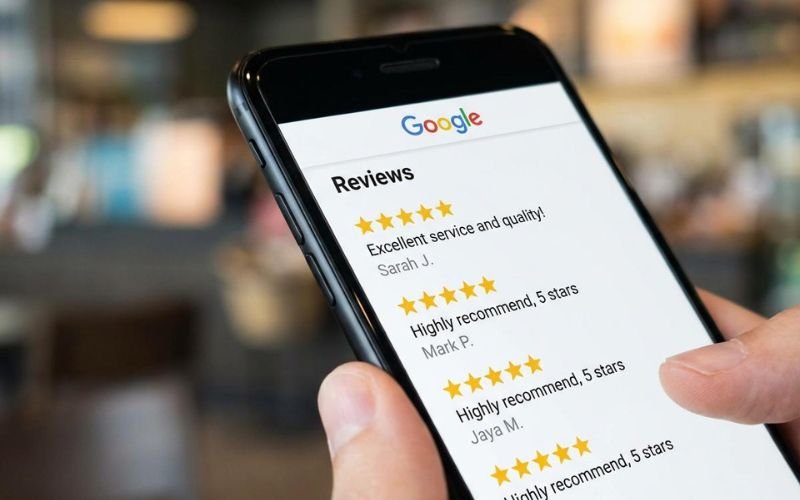
A potential customer searching for a cannabis dispensary may compare several businesses before deciding where to visit. They might check Google Maps, read customer feedback, compare ratings, look at recent comments and assess how each business responds to complaints.
A few negative Google reviews can influence that decision, particularly when the same complaints appear repeatedly.
For dispensaries, reputation management requires more than collecting positive ratings. Customers may have concerns about staff communication, product availability, waiting times, store cleanliness, pricing clarity or the overall shopping experience. When these concerns appear in public reviews and remain unanswered, they can create doubts about the business.
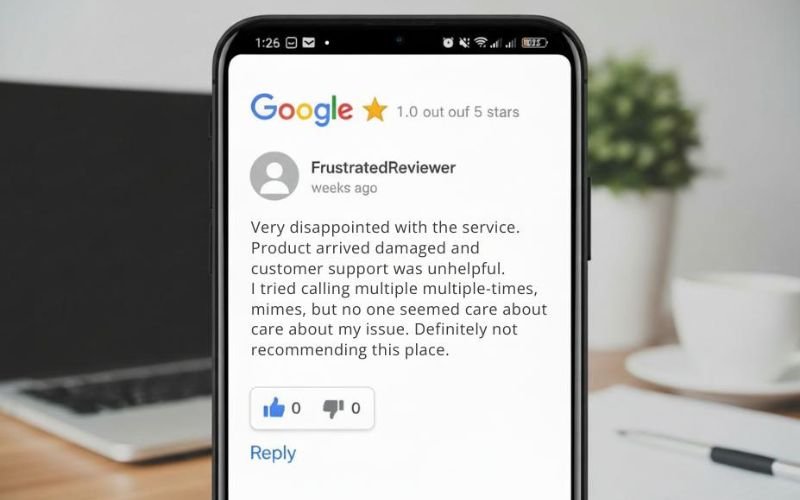
Negative Google reviews can damage a dispensary’s reputation by reducing customer confidence, highlighting unresolved service problems and influencing how potential customers compare local businesses. However, a negative review does not automatically mean a dispensary has a poor reputation. What matters is how the business responds, investigates complaints and improves the customer experience.
This guide explains how dispensaries can manage negative Google reviews, respond professionally, identify policy violations and build a more reliable online reputation.
Why Google Reviews Matter for Cannabis Dispensaries
Google reviews give potential customers an opportunity to learn about other people’s experiences before visiting a dispensary.
Someone searching for a dispensary in Toronto, Los Angeles, Vancouver or Denver may compare multiple local businesses. Alongside location and business information, they can see customer ratings and written feedback.
Reviews can help answer practical questions:
- Do customers describe the staff as helpful?
- Are people satisfied with the overall shopping experience?
- Do customers mention long waiting times?
- Are complaints about product availability common?
- Does the business respond when customers raise concerns?
- Do recent reviews suggest that service quality has improved?
Google explains that reviews appear alongside Business Profiles in Search and Maps and can help businesses stand out. It also recommends responding professionally and valuing balanced customer feedback.
For a dispensary, this feedback is especially relevant because customers may want to understand the store’s service standards, product information process, accessibility and overall customer experience before visiting.
How Negative Google Reviews Damage a Dispensary’s Reputation
One negative review does not necessarily destroy customer trust. The bigger concern is the impression created by repeated complaints, unresolved problems or defensive business responses.
Here are some ways negative feedback can affect a dispensary.
1. Potential Customers May Choose a Competitor
Customers often compare several businesses before making a decision.
Imagine someone searching for a cannabis dispensary near their location. They find two nearby stores:
- Dispensary A has a collection of positive and negative reviews, with thoughtful responses from management.
- Dispensary B has several recent complaints about staff behaviour, long waiting times and unresolved customer concerns.
Even if both stores are conveniently located, the customer may feel more comfortable choosing the business that demonstrates accountability.
The problem is not simply that negative reviews exist. It is whether the feedback creates a consistent impression that the business does not address customer concerns.
2. Repeated Complaints Can Create a Negative Brand Image
A single complaint about a long wait may be an isolated experience.
However, when multiple customers mention similar problems over several weeks or months, potential customers may begin to see a pattern.
For example:
| Repeated customer complaint | Possible impression |
| Staff are difficult to communicate with | Poor customer service |
| Products are frequently unavailable | Unreliable inventory communication |
| Waiting times are excessive | Inefficient store operations |
| Staff cannot explain product information clearly | Lack of helpful guidance |
| Management never responds to complaints | Poor accountability |
These impressions can influence customer decisions even when the business has positive reviews elsewhere.
Dispensary owners should look beyond individual comments and identify recurring issues.
3. Unanswered Reviews Can Make the Business Look Unresponsive
A negative review gives a business an opportunity to demonstrate how it handles customer concerns.
When a customer leaves a detailed complaint and the business never responds, other people reading the review may wonder whether management takes feedback seriously.
A professional response does not need to solve the entire problem publicly. It should acknowledge the concern, demonstrate that the business is willing to investigate and provide an appropriate way to continue the conversation privately.
Google itself recommends timely, professional and personalized responses to negative reviews.
4. Negative Feedback Can Affect Customer Confidence Before a Visit
A customer may have questions about store policies, staff communication, product availability or the general shopping experience.
If recent reviews repeatedly describe confusion or poor communication, the customer may hesitate to visit.
This can be particularly important for a new dispensary that has not yet established a recognizable local reputation.
A business with limited brand recognition has fewer opportunities to overcome a negative first impression. Consistent communication and a professional public response can help address some of that uncertainty.
5. Negative Reviews Can Reveal Operational Problems
Not every negative review is an unfair attack.
Some complaints may reveal genuine problems that management has not noticed.
For example:
- Customers repeatedly mention unclear store policies.
- Several reviews describe long queues during busy periods.
- Customers report that staff communication is inconsistent.
- Visitors struggle to find accurate opening-hour information.
- Customers mention difficulty getting answers to basic questions.
These complaints can help dispensary owners identify operational improvements.
A review-management process should therefore do more than monitor star ratings. It should help the business understand what customers are experiencing.
Common Reasons Cannabis Dispensaries Receive Negative Google Reviews
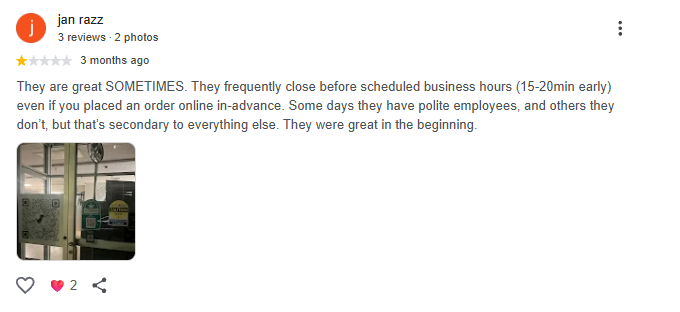
Understanding the reason behind a complaint is the first step toward responding appropriately.
The following are common examples of issues that can appear in dispensary reviews.
Poor Customer Service
Customers may complain when staff members appear impatient, provide unclear information or fail to address questions professionally.
Even when a store is busy, employees should communicate respectfully and explain relevant procedures.
What management can do: Review customer-service procedures, train employees on communication and establish a clear process for escalating complaints.
Long Waiting Times
Waiting times can become a source of frustration, especially during busy periods.
Customers may feel that the store is poorly organized when they receive no explanation about delays.
What management can do: Review peak-hour staffing, queue management and the way employees communicate expected waiting times.
Product Availability Issues
A customer may visit after seeing information about a product or expecting a particular item to be available.
If availability changes and staff do not communicate clearly, the customer may leave dissatisfied.
What management can do: Keep relevant business information accurate and train staff to explain availability limitations clearly. Avoid making promises about inventory that cannot be confirmed.
Confusing Store Policies
Customers may misunderstand store procedures, identification requirements, payment options or other operational policies.
A lack of clear communication can lead to complaints.
What management can do: Make relevant policies easy to understand and ensure that employees communicate them consistently.
Unresolved Customer Complaints
A complaint can become more serious when the customer feels ignored after contacting the business.
If the same issue appears in a public review, management should investigate whether the original concern was properly handled.
What management can do: Create a complaint-handling process with clear ownership, response expectations and follow-up responsibilities.
How to Respond to Negative Google Reviews Professionally
A good response should be calm, specific and helpful. The goal is not to win an argument with the reviewer. It is to show the reviewer and other potential customers that the business takes feedback seriously.
Use the following process.
Step 1: Read the Entire Review Before Responding
Avoid replying immediately when a negative review appears.
Read the complete comment and identify the actual concern.
Ask:
- Is the customer reporting a specific service issue?
- Does the complaint relate to a particular visit?
- Is the review describing a misunderstanding?
- Does the complaint involve a matter that requires private investigation?
- Has a similar issue appeared in other reviews?
This helps management prepare a relevant response rather than posting a generic apology.
Step 2: Check the Facts Internally
Before accepting or disputing a complaint, review the information available to the business.
Depending on the issue, this may involve checking:
- Relevant customer-service records
- Store procedures
- Staff feedback
- Business-hour information
- The complaint-handling history
- Relevant operational records
Do not publicly disclose customer records or sensitive details to prove that a reviewer is wrong.
The purpose of an internal review is to understand what happened and decide how the business should respond.
Step 3: Acknowledge the Customer’s Experience
A professional response should recognize the concern without becoming defensive.
For example:
“We’re sorry to hear that your experience did not meet your expectations. We appreciate you bringing this concern to our attention.”
This acknowledges the feedback without making unsupported claims about what happened.
If the business clearly made a mistake, an appropriate apology and explanation may be more useful than trying to justify the situation.
Step 4: Offer a Private Way to Continue the Conversation
Some complaints involve details that should not be discussed publicly.
Invite the reviewer to contact the business through an appropriate official channel so management can investigate.
Avoid asking the reviewer to post personal information, order details or other sensitive information in a public reply.
Step 5: Follow Up and Address the Underlying Problem
A response is only one part of reputation management.
If the complaint identifies a genuine operational issue, the business should investigate it and take reasonable corrective action.
For example, if several reviews mention unclear communication, management may need to review staff training rather than simply posting more apologies.
Step 6: Keep the Response Professional
Never insult, threaten, argue with or publicly shame a reviewer.
A defensive response can make a business look less trustworthy, even when the original complaint is unfair.
Google recommends keeping replies professional, relevant, concise and respectful. It also advises businesses to protect reviewer privacy.
Examples of Professional Responses to Negative Dispensary Reviews
The following examples can help dispensary owners develop their own responses. They should be adapted to the actual complaint and should not be posted without checking the facts.
Example 1: Complaint About Customer Service
Customer review: “The staff were not helpful and the overall experience was disappointing.”
Suggested response:
“Thank you for sharing your feedback. We’re sorry to hear that your experience did not meet your expectations. Providing respectful and helpful service is important to us, and we would appreciate the opportunity to understand your concerns. Please contact our management team through our official contact details so we can look into this further.”
Example 2: Complaint About Waiting Time
Customer review: “I had to wait much longer than expected. The service was frustrating.”
Suggested response:
“We appreciate you bringing this to our attention. We’re sorry about the inconvenience caused by the waiting time. We understand that clear communication is important, and we’ll review your feedback with our team to identify where improvements may be needed.”
Example 3: Complaint About Product Availability
Customer review: “I visited the store expecting an item to be available, but it wasn’t.”
Suggested response:
“Thank you for your feedback. We understand how disappointing it can be when an expected item is unavailable. Availability can change, and we appreciate the opportunity to improve how we communicate this information. Please contact our team if you would like us to look into your experience.”
Example 4: A Review With Very Little Detail
Customer review: “Terrible experience. Would not recommend.”
Suggested response:
“We’re sorry to hear that you had a disappointing experience. We would like to understand what went wrong and see whether there is anything we can do to address your concerns. Please reach out to our management team through our official contact details.”
Example 5: A Review the Business Cannot Identify
Customer review: “The service was bad, and nobody helped me.”
Suggested response:
“Thank you for sharing your feedback. We take customer concerns seriously and would like to understand more about your experience. Please contact our management team privately so we can review the matter and determine how best to assist.”
These responses are starting points, not templates to copy under every review. Personalizing the reply makes it more useful and shows that management has actually read the feedback.
When Should a Dispensary Report a Negative Google Review?
Not every negative review qualifies for removal.
A customer is allowed to share an honest negative opinion about a genuine experience. A business should not report a review simply because it disagrees with the rating or dislikes the comments.
Google states that only reviews violating its content policies are eligible for removal.
A review may be worth reporting when it contains:
- Spam or fake engagement
- Content that does not reflect a genuine experience
- Harassment or personal attacks
- Certain forms of offensive or inappropriate content
- Conflicts of interest or other prohibited content
- Content that violates Google’s applicable Maps user-generated content policies
How to Report a Policy-Violating Review
If a dispensary believes a review violates Google’s policies, it can follow this process:
- Open the relevant Google Business Profile.
- Select the reviews section.
- Locate the review that may violate Google’s policies.
- Select the report option next to the review.
- Choose the reason that best matches the suspected violation.
- Submit the report and monitor its status.
Businesses can also use Google’s Reviews Management Tool to report reviews and check eligible appeal options.
Google explains that review evaluation typically takes several days. If a review is assessed and no policy violation is found, an eligible review may have a one-time appeal option.
Important: Reporting a review does not guarantee removal. A genuine review that complies with Google’s policies may remain visible even if the business considers it unfair.
How to Handle Fake, Misleading or Malicious Reviews
Some dispensaries may receive reviews that appear unrelated to actual customer experiences. Others may notice a sudden increase in similar complaints or suspicious activity.
These situations require careful investigation.
Look for Patterns Rather Than Making Assumptions
Potential warning signs may include:
- Multiple reviews using unusually similar wording.
- A sudden cluster of reviews with no clear business explanation.
- Comments that refer to a different business.
- Reviews containing irrelevant promotional material.
- Content that appears to be posted by someone with a conflict of interest.
These signs do not independently prove that a review is fake. The business should assess the available evidence and compare the content with the platform’s policies.
Keep Records of Suspicious Activity
When a dispensary suspects coordinated or malicious review activity, management should document:
- The review URL or relevant profile details
- The date the review appeared
- The exact content of the review
- Any relevant communication or supporting records
- Similar reviews that may indicate a pattern
This information can help when submitting a report or contacting platform support.
Avoid Public Arguments and Threats
Do not accuse someone of being a competitor, former employee or fake customer without evidence.
Avoid threatening legal action simply because a review is negative. If a review contains potentially defamatory statements or raises a serious legal concern, seek advice from a qualified legal professional before taking action.
The best approach is to preserve evidence, use the platform’s reporting process where appropriate and keep public communication professional.
How Dispensaries Can Build a Stronger Google Review Management Strategy
Responding to individual complaints is useful, but a consistent process helps businesses identify problems earlier.
A practical review-management strategy should include the following activities.
1. Monitor Reviews Regularly
Check Google Business Profile reviews on a consistent schedule.
For dispensaries with multiple locations, monitor each location separately. A complaint about one store should not be confused with feedback about another branch.
A simple review tracker can include:
| Information | What to record |
| Review date | When the review appeared |
| Location | Which dispensary received it |
| Rating | Star rating |
| Main concern | Service, waiting time, communication or another issue |
| Response status | Pending, responded or escalated |
| Action required | Investigation or operational follow-up |
This makes it easier to identify unresolved complaints and recurring customer concerns.
2. Ask Customers for Honest Feedback
A business should make it easy for genuine customers to share their experiences.
Dispensaries can use appropriate review request methods, such as:
- A Google review link shared through permitted customer communication.
- A QR code at an appropriate customer touchpoint.
- A neutral follow-up message after a visit.
- A reminder on an approved customer communication channel.
The request should be neutral. Do not ask only customers who appear satisfied to leave reviews, and do not pressure customers to provide a particular rating.
Google explicitly prohibits offering free or discounted goods or services in exchange for posting, changing or removing reviews.
Read Google’s review collection guidelines before creating a review-generation process.
3. Train Employees to Handle Customer Concerns
Employees are often the first people who hear about a customer’s problem.
Provide clear guidance on:
- Communicating store policies
- Explaining operational limitations
- Handling complaints respectfully
- Escalating difficult situations
- Maintaining customer privacy
- Avoiding arguments with customers
A consistent approach across the team can help reduce preventable complaints.
4. Identify Repeated Feedback Themes
Do not focus exclusively on the overall star rating.
Review the written comments and group them by subject.
For example:
| Feedback theme | Recommended action |
| Staff communication | Review training and service procedures |
| Long waiting times | Assess staffing and queue management |
| Unclear policies | Improve customer-facing explanations |
| Store information | Check the accuracy of business details |
| Unresolved complaints | Review escalation and follow-up procedures |
This turns customer feedback into a practical management resource.
5. Maintain Accurate Business Information
Outdated information can create avoidable frustration.
Review the details shown on your Google Business Profile, including:
- Business name
- Address and location
- Opening hours
- Contact information
- Website URL
- Relevant business categories
- Other applicable profile information
Make sure the information reflects the actual business and complies with Google’s guidelines and applicable local requirements.
6. Encourage Management to Participate
Review management should not be left entirely to front-line employees.
Assign a responsible person to monitor reviews, approve responses when necessary and escalate sensitive complaints.
For a dispensary chain, establish consistent response standards across locations while allowing each store to investigate its own customer-service issues.
Reputation Management Mistakes Dispensaries Should Avoid
Some attempts to improve an online reputation can create more problems than they solve.
| Mistake | Why it can cause problems | Better approach |
| Buying positive Google reviews | Creates misleading feedback and risks platform action | Request genuine customer feedback |
| Offering rewards for five-star reviews | Violates Google’s review incentive rules | Use neutral review requests |
| Asking only happy customers for reviews | Can create a misleading picture of customer feedback | Invite genuine customers without sentiment filtering |
| Posting identical replies everywhere | Makes responses feel impersonal | Address the specific concern |
| Arguing with reviewers | Can make the business appear defensive | Respond calmly and professionally |
| Reporting every negative review | Genuine criticism is not automatically removable | Report only suspected policy violations |
| Ignoring repeated complaints | Leaves underlying operational issues unresolved | Track and investigate recurring feedback |
| Sharing customer details publicly | Can expose private information | Move sensitive discussions to a private channel |
| Paying someone to remove genuine criticism | Can create legal and trust concerns | Follow legitimate platform and legal processes |
Understand the Legal and Platform Rules
Dispensaries operating in the United States and Canada should also consider the rules governing online reviews.
In the United States, the Federal Trade Commission’s Consumer Reviews and Testimonials Rule, effective October 21, 2024, addresses practices such as fake reviews, certain undisclosed insider reviews, sentiment-conditioned incentives and certain review-suppression practices.
In Canada, the Competition Bureau has warned businesses that employee reviews and other online reviews can create misleading impressions when business connections are not properly disclosed.
The exact legal requirements depend on the jurisdiction and circumstances. Dispensary owners should seek qualified legal advice for specific compliance questions.
A Practical Google Review Management Checklist for Dispensaries
Use this checklist to keep reputation management consistent.
- Monitor Google reviews regularly.
- Check reviews for every business location.
- Respond to genuine complaints professionally.
- Investigate recurring customer concerns.
- Avoid sharing private customer information.
- Report reviews only when there is a reasonable policy-based concern.
- Keep records of suspicious review activity.
- Ask genuine customers for honest feedback.
- Never purchase reviews or offer rewards for positive ratings.
- Train employees on customer communication.
- Review store policies and customer-service procedures.
- Keep Google Business Profile information accurate.
- Track response status and operational follow-up.
A consistent process makes it easier to manage feedback without treating every negative comment as a reputation crisis.
How Dispensary SEO Company Can Help With Online Reputation Management
Managing a dispensary’s online reputation takes time, consistency and a clear understanding of local search platforms.
If negative Google reviews are creating concerns for your cannabis business, it may be worth reviewing the wider picture. That includes the quality of your public responses, the consistency of your business information, the way customers discover your dispensary and the recurring issues appearing in feedback.
We help cannabis businesses strengthen their online presence through SEO-focused strategies and local search optimization.
Our support can include:
- Google Business Profile review and optimization
- Local SEO audits
- Review monitoring and response strategy guidance
- Local business information consistency checks
- Competitor and local visibility analysis
- Website content and technical SEO improvements
- Reputation-related content strategy
We focus on genuine customer feedback and policy-compliant practices. We do not promise to remove legitimate negative reviews, manufacture positive ratings or guarantee a particular Google ranking.
Still dealing with negative reviews or struggling to manage your dispensary’s online reputation? You don’t have to handle everything alone. Contact Dispensary SEO Company today to discuss how we can help improve your local online presence.
Frequently Asked Questions
1. Can negative Google reviews hurt a cannabis dispensary’s reputation?
Yes. Negative reviews can influence how potential customers perceive a dispensary, especially when multiple reviews describe similar problems or management does not respond. Their impact depends on the content, context, recency and overall pattern of customer feedback.
2. Can a dispensary remove negative Google reviews?
A dispensary can report reviews that it believes violate Google’s content policies. However, Google does not remove reviews simply because a business disagrees with them or considers them unfair. Reviews that comply with Google’s policies may remain visible.
3. How should a dispensary respond to a one-star Google review?
Respond calmly and professionally. Acknowledge the concern, avoid personal attacks, protect customer privacy and offer an appropriate private channel for further discussion. Check the facts before making claims or promising a resolution.
4. Should dispensaries respond to every negative review?
A business should prioritize reviews that raise specific concerns, contain useful feedback or require clarification. Responses should be relevant and helpful rather than repetitive. Google recommends professional and personalized replies.
5. Can a dispensary offer discounts in exchange for positive Google reviews?
No. Google prohibits incentives offered in exchange for posting, changing or removing reviews. Businesses should ask for honest feedback without requiring a particular rating or sentiment.
6. What should a dispensary do if it receives fake or suspicious reviews?
Document the activity, review the content against Google’s policies and report suspected violations through the appropriate process. Avoid publicly accusing a reviewer without evidence.
7. Do negative Google reviews directly lower dispensary rankings?
There is no reliable basis for claiming that every negative review directly causes a ranking drop. Google local search visibility depends on multiple factors. Reviews can influence customer perceptions, while review quantity and positive ratings are among the relevance and prominence considerations discussed in Google’s local ranking guidance. Businesses should focus on genuine feedback and overall customer experience rather than trying to manipulate ratings.
8. How can a new dispensary build a positive online reputation?
Start by providing a consistent customer experience, maintaining accurate business information and inviting genuine customers to share honest feedback. Monitor reviews, respond professionally and address recurring problems as the business grows.
9. How often should a dispensary monitor Google reviews?
There is no universal schedule for every business. A dispensary should establish a monitoring routine that matches its review volume and number of locations. Businesses receiving frequent feedback may need to check more often than smaller stores.
10. Can an SEO company help manage a dispensary’s online reputation?
Dispensary SEO company can help with local search optimization, Google Business Profile audits, review-management strategy, monitoring processes and reputation-related content. It cannot guarantee removal of genuine negative reviews or control Google’s review decisions.
Final Thoughts
Negative Google reviews should not be treated as a problem that can always be solved by removing comments or collecting more five-star ratings.
For a cannabis dispensary, the more sustainable approach is to understand why customers are dissatisfied, respond professionally and improve the experience where necessary.
A balanced review profile, clear communication and consistent management responses can help potential customers make more informed decisions about your business.
The goal is not to make every review positive. It is to build a dispensary reputation that reflects genuine customer experiences and demonstrates that management takes feedback seriously.